Exhibition Stand Logistics: The Complete Guide

Exhibition stand logistics is everything that happens between the finished stand leaving the workshop and the crates coming home after the show: transport, customs, delivery slots, on-site handling, the build, the breakdown, return freight and storage. It is invisible when it works and a crisis when it does not — and at busy fairgrounds the margins are tight.
Project Management First
Logistics only runs smoothly if one named person owns the timeline — production dates, transport booking, delivery windows, build and breakdown, return. That is the job of a project manager, and it is the single biggest predictor of a calm show. Build the schedule with buffer: the stand on site at least 24 hours before an international show opens.
Transport and Shipping
- Driving vs freight. Within Europe, a contractor with its own transport can often drive the stand and hand-deliver it — no freight-forwarder handoffs, no lost pallets. Air and sea freight introduce delay and damage risk; use them only when distance forces it.
- Consolidation. One well-packed load beats several part-loads on cost and carbon.
- Packing. Reusable crates and cases protect the stand and speed up handling — and they matter more for a reusable stand that ships repeatedly.
Customs and Paperwork
- Within the EU: goods move freely. Keep an itemised value list for the stand and exhibits.
- Non-EU goods that return home (exhibits, demo units, stand parts): use an ATA Carnet to avoid paying import duty and VAT.
- Consumables (giveaways, brochures, samples) are a permanent import — duty and import VAT apply.
- Organiser paperwork: the exhibitor manual sets every deadline — stand-plan submission, rigging and electrical orders, vehicle passes, delivery-slot booking.
For German shows specifically, see exhibiting in Germany from abroad.

Delivery Slots and On-Site Handling
At large fairgrounds — especially the German ones — delivery slots are booked to the quarter-hour and enforced through a marshalling yard. Miss your slot and you circle. On-site storage is minimal: empties are labelled, removed during the show and returned for breakdown. Plan for forklift and crane bookings, and for who signs the space handover.
The Build
Build-up runs to a fixed schedule (Aufbau). Your crew needs the drawings, the method statement, the right passes, and enough time for a proper build plus a snag check before doors open. A workshop pre-build means problems are already solved before the stand reaches the hall.
Dismantling and Return
Breakdown (Abbau) is tightly timed and often chaotic across the hall. A good plan covers:
- labelled crates and a packing order agreed in advance;
- a booked collection slot;
- return transport routed for the next show or for storage;
- a damage check on unpacking, so repairs happen before the next build.
Storage
Between shows the stand needs a home — ideally near your show circuit so it is not shipped back and forth. Good storage is climate-appropriate, inventoried, and close to your contractor’s workshop for quick turnarounds and repairs.
Waste
Fairgrounds charge for waste and increasingly score exhibitors on it. Minimise it with reusable crates and graphics, and dispose of what is left through the organiser’s channels.
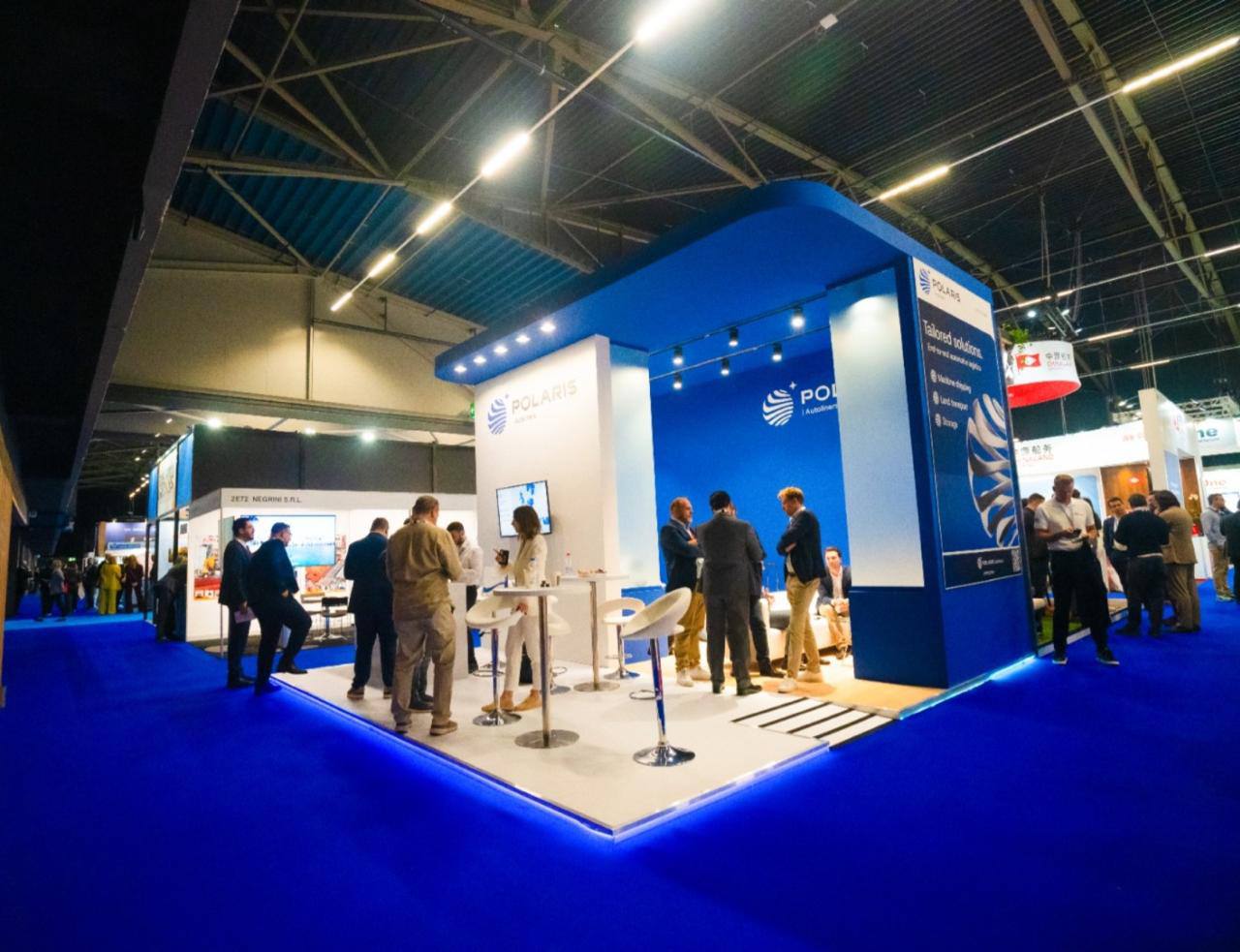
Maverick runs logistics in-house — transport, customs support, on-site management, storage and reconfiguration — as one turnkey service across Germany and the EU. Our stand for Polaris Autoliners at Transport Logistic Munich is a logistics company we handled the logistics for. Get in touch.
Frequently Asked Questions
What do exhibition stand logistics include?
Transport and shipping, customs and carnets, delivery-slot booking, on-site handling, the build, the breakdown, return freight, storage between shows, and waste disposal.
Do I need an ATA Carnet for a trade show?
For non-EU goods that will return home — exhibits, demo units, stand parts — yes. It avoids paying import duty and VAT. EU goods move freely; consumables are a permanent import.
How early should a stand arrive at a trade show?
At least 24 hours before an international show opens, so a delay is an inconvenience rather than a disaster. Delivery slots at large fairgrounds are booked to the quarter-hour.
Is it better to drive or freight an exhibition stand?
Within Europe, driving is usually better — no freight-forwarder handoffs, lower delay and damage risk. Air and sea freight are for distances that leave no alternative.
Who manages exhibition stand logistics?
A dedicated project manager should own the whole timeline. With a full-service contractor this is included; if you split suppliers, someone on your side has to coordinate them.