Koelnmesse Stand Builder: Halls, Approvals and Build Reality

Koelnmesse sits on the right bank of the Rhine in Deutz, with a mainline station at the door and the airport twenty minutes away. It is one of the most exhibitor-friendly grounds in Germany to reach — and one where stand density at the big fairs is high enough that a generic design simply disappears.
We have built at this ground repeatedly, most often at DMEXCO. This is what the venue actually demands.
| Venue | Koelnmesse, Cologne (Deutz) |
|---|---|
| Layout | Eleven exhibition halls linked by the Boulevard, plus Congress-Centrum Nord and Ost |
| Flagship shows | Anuga, imm cologne, gamescom, DMEXCO, ISM, interzum, Orgatec, spoga+gafa |
| Key constraint | High stand density, booked delivery slots, approval deadlines |
| Typical stand budget | €400–€1,200 per m² turnkey ⟨CHECK⟩ |
| Lead time we work to | From 6 weeks; 10–12 weeks for large custom builds ⟨CHECK⟩ |
The Halls, and What They Demand
- Hall generations differ. Koelnmesse has been rebuilt and extended in stages, so ceiling heights, rigging capacity and column spacing vary between hall ranges. Draw against the specific hall, not the ground;
- Multi-level halls constrain module size. Where a hall has an upper floor, the goods lift dimensions — not the design — set the maximum size of any single stand module;
- The Boulevard is the artery. It links the halls and carries visitor flow between them, which makes stands near the connections valuable and the aisles around them congested;
- Congress-Centrum spaces run to different rules from the halls: lighter fixings, restricted loading and free-standing builds.
Shows Worth Building Properly For
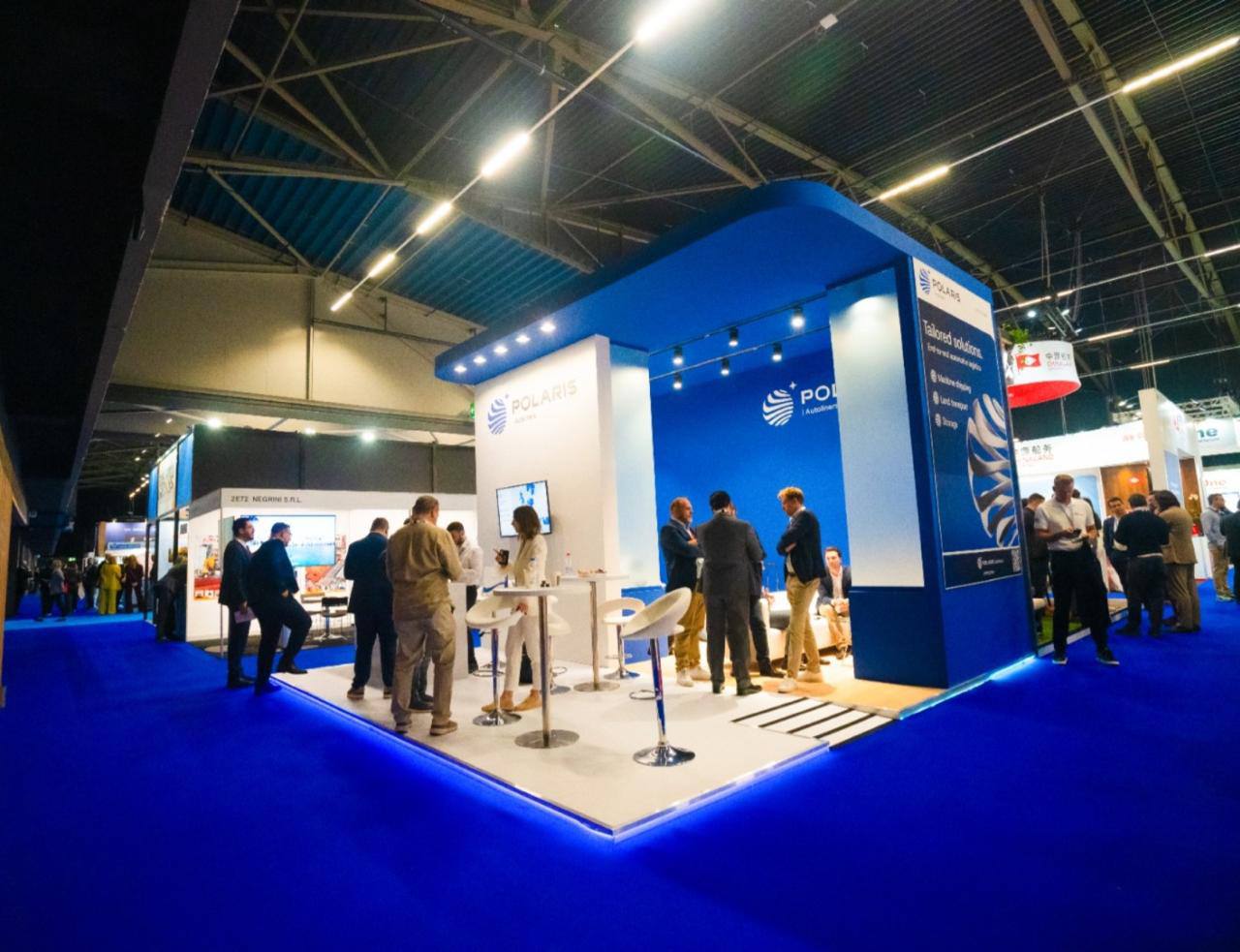
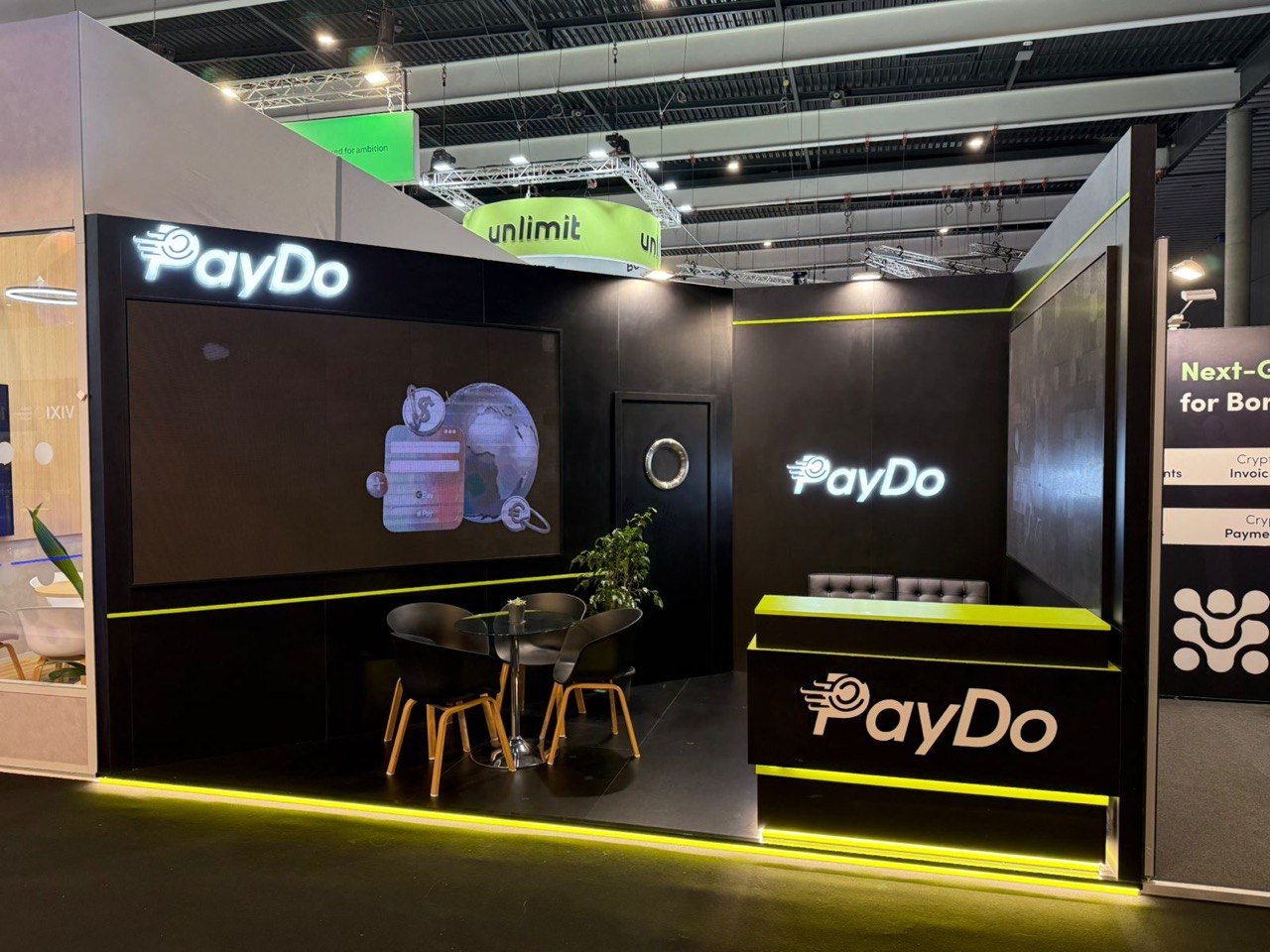
- DMEXCO — digital marketing, and the show we know best here. Stands are meeting factories: scheduled back-to-back conversations, demo pods and hospitality under real pressure. We have built an 88 m² modular stand, a 55 m² double-decker and a 56 m² bespoke stand for MGID across successive editions, plus a tech-forward space for Adtelligent;
- Anuga — food and beverage, biennial and enormous, with catering, refrigeration and sampling built into the stand;
- imm cologne — interiors, where the stand is judged as a piece of design in its own right;
- gamescom — consumer gaming, with queue management, AV load and crowd flow as the primary design problems;
- ISM — sweets and snacks, high stand density and sampling logistics;
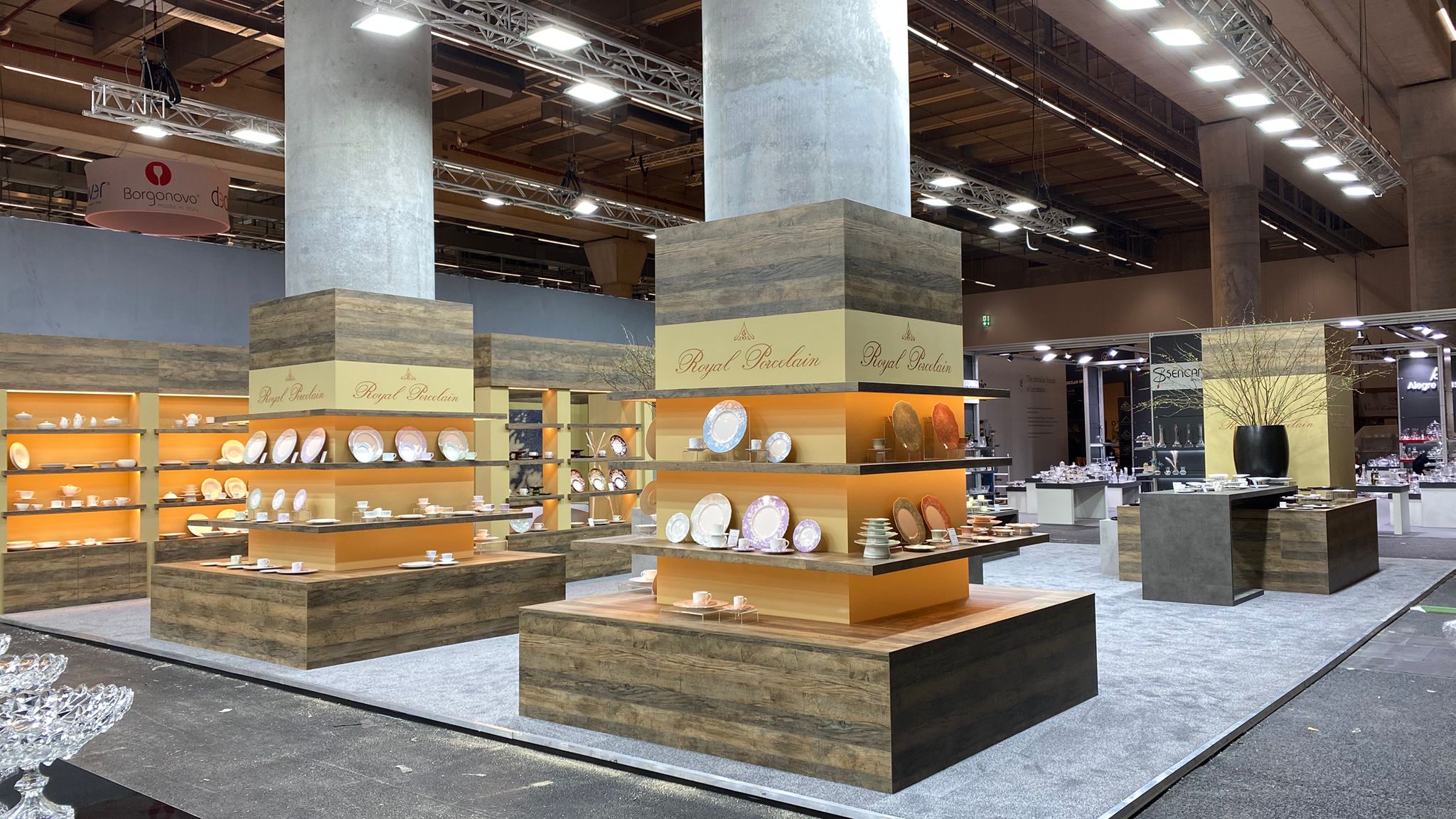
- interzum, Orgatec and spoga+gafa — furniture supply, workplace and garden, all material-led fairs where finish quality is closely inspected. ⟨CHECK current show roster and dates⟩
What Building at Koelnmesse Actually Involves
Stand approval and structural sign-off
For space-only stands, drawings go to the organiser for a Standbaugenehmigung before you may build, on a deadline well ahead of build-up. Raised floors, towers, suspended rigging and double-deckers also require a Standsicherheitsnachweis signed by a qualified person. We handled exactly that for MGID’s 55 m² double-decker here. Detail in exhibition stand regulations in Germany.
The Technische Richtlinien are per event
Heights — often stepped — set-backs, permitted closed frontage, rear-wall finishing, aisle lines, electrical standards and rigging loads are published per fair. Build to the edition for your show.
Materials need certificates
Class B1 (low flammability) to DIN 4102 or the Euroclass equivalent for wall panels, drapes, carpet and decoration, with the certificates travelling with the stand.
Delivery slots and no storage
Slots are booked and enforced through a marshalling yard, and on-site storage is minimal. The stand has to arrive in build order, pre-assembled where possible and labelled. Our builds here are designed around that from the first sketch — see exhibition stand logistics.
Density is the design problem
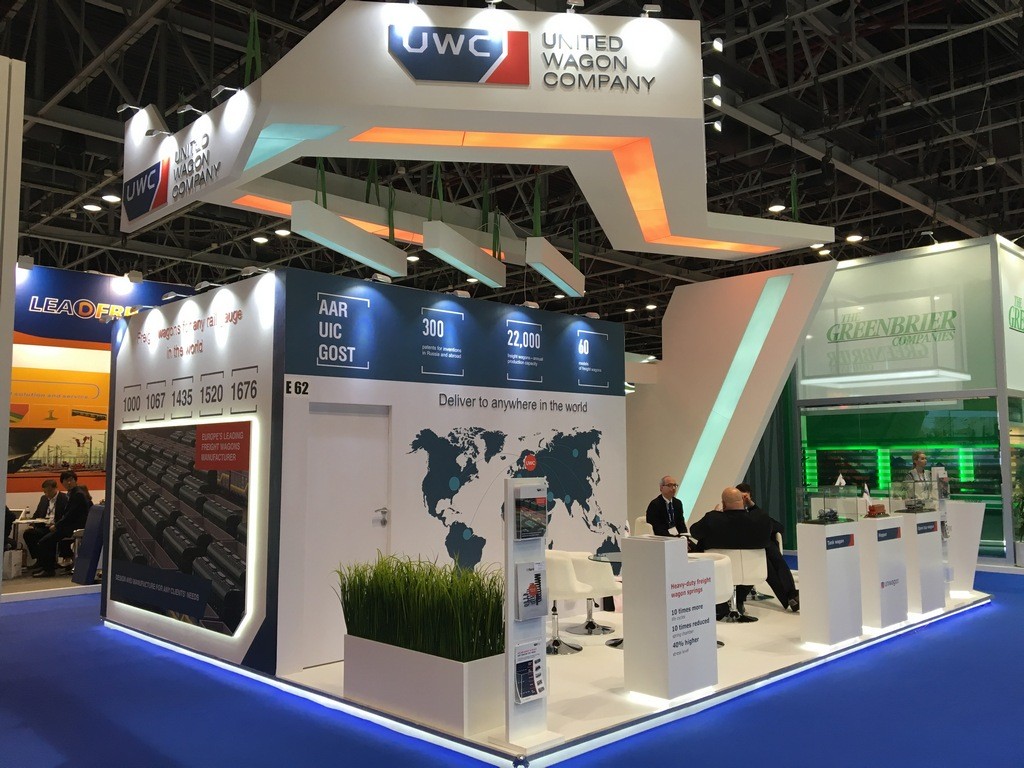
At DMEXCO, gamescom and Anuga the halls are dense and loud. Height, overhead branding and one strong lit feature do more than extra floor area. The principles are in how to stand out at a trade show.

How We Work
Concept and 3D visual drawn against your actual hall and stand number. Manufacture in our own workshops, a full pre-build before shipping, transport on a slot we hold, installation with our own supervised crew, on-site project management, dismantle and storage. One contract, one project manager, reachable through the show.
- Custom stands for flagship appearances;
- Double-deck builds where meeting space has to sit above the footprint — a format that suits DMEXCO particularly well;
- Reusable structures that redeploy across the German calendar without a redesign.
Why Maverick
We have built this ground repeatedly. Four MGID and Adtelligent builds at DMEXCO, including a double-decker that needed structural sign-off.
Own production and a full pre-build. Problems get solved in the workshop, with days in hand.
We drive the stand. Inside Europe it is hand-delivered on a booked slot, not handed to a forwarder.
One standard everywhere — see the coverage map and exhibition stand manufacturer vs supplier.
Also exhibiting elsewhere in Germany? See Frankfurt, Munich, Düsseldorf and the Germany hub, or the Cologne page.
Exhibiting at Koelnmesse This Season?
Send the show, hall and stand number and we will come back with a concept, a real price and the approval timeline. Talk to us.
Frequently Asked Questions
Do I need approval to build a stand at Koelnmesse?
For space-only stands, yes — a Standbaugenehmigung with drawings submitted to the organiser by a set deadline. Raised floors, towers, rigging and double-deckers additionally need a Standsicherheitsnachweis signed by a qualified person.
Can you build a double-decker stand at DMEXCO?
Yes, and it suits the show well — meetings above, demos below. It requires engineered drawings and structural sign-off submitted alongside the stand approval. We built a 55 m² double-decker for MGID at DMEXCO on exactly that basis.
How much does a stand at Koelnmesse cost?
As a guide, roughly €400–€1,200 per m² turnkey depending on complexity, before floor space, organiser services and staff. ⟨CHECK⟩ Cologne fair-week accommodation rises sharply around gamescom and Anuga.
What makes a stand work at a dense Cologne fair?
Height and overhead branding to win the decision from the aisle, one strong lit feature rather than several, an open frontage, and enough semi-private seating to hold the conversations the show is actually for.
How early should I start a Koelnmesse stand?
Ten to twelve weeks for a large custom build and six for modular — but check the stand-approval deadline as soon as you book the space, because it usually falls earlier than exhibitors expect.